libyt: an In Situ Interface Connecting Simulations with yt, Python, and Jupyter Workflows
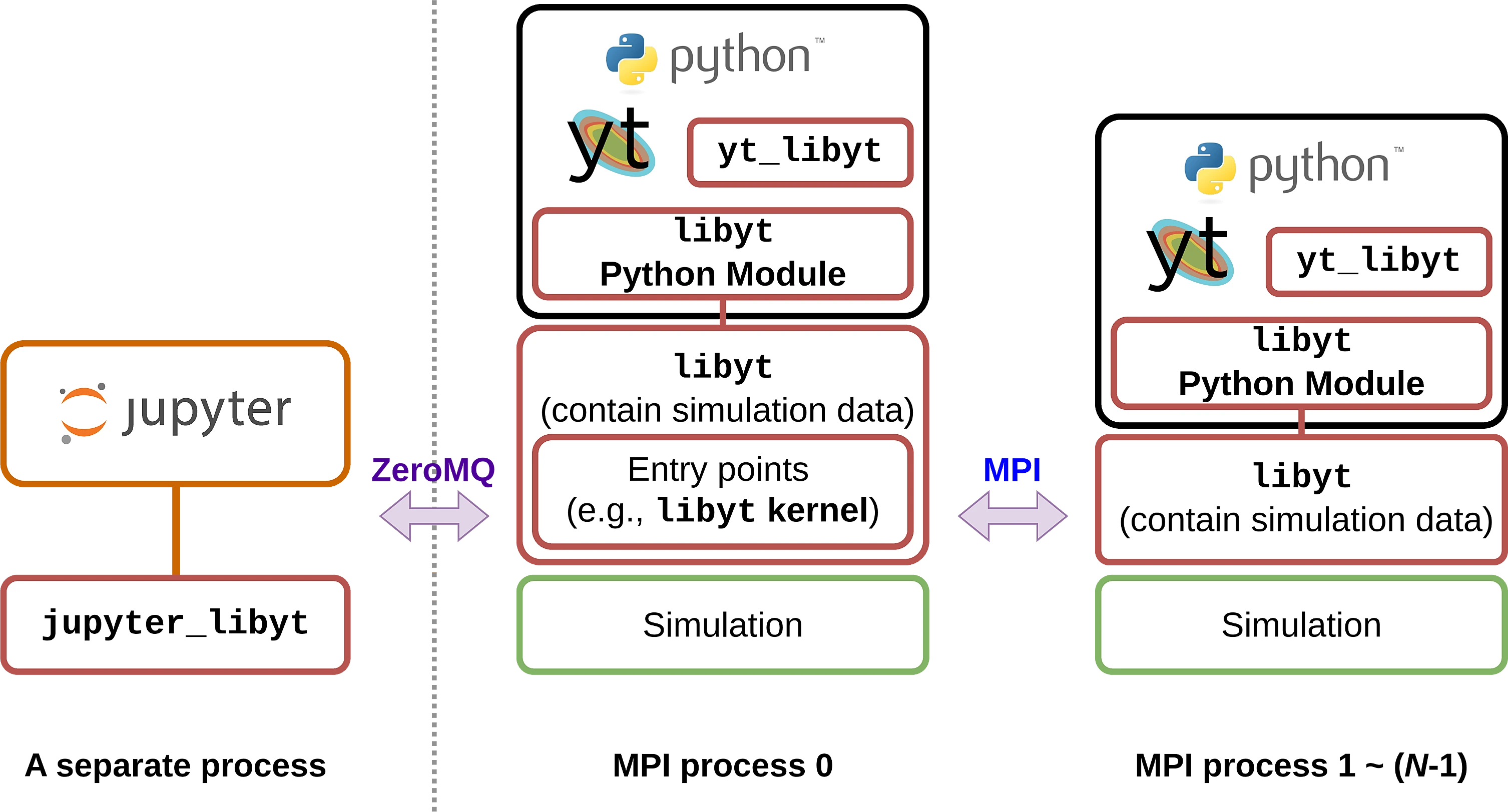
We present libyt, an open-source C library that enables in situ analysis of astrophysical simulation data by directly connecting simulation codes to the Python ecosystem, including yt and Jupyter workflows, without costly intermediate disk I/O. libyt allows simulations to execute Python analysis routines at runtime, reuse existing post-processing scripts with minimal changes, and interactively explore data via Python prompts or Jupyter notebooks. We describe its architecture, API design, and integration into high-performance simulation codes such as GAMER and Enzo, and demonstrate its application to a range of problems, including core-collapse supernovae, isolated dwarf galaxies, and fuzzy dark matter. libyt thus bridges high-performance simulations with flexible data analysis and visualization in a unified, scalable workflow.
An Adaptive Mesh, GPU-Accelerated, and Error Minimized Special Relativistic Hydrodynamics Code
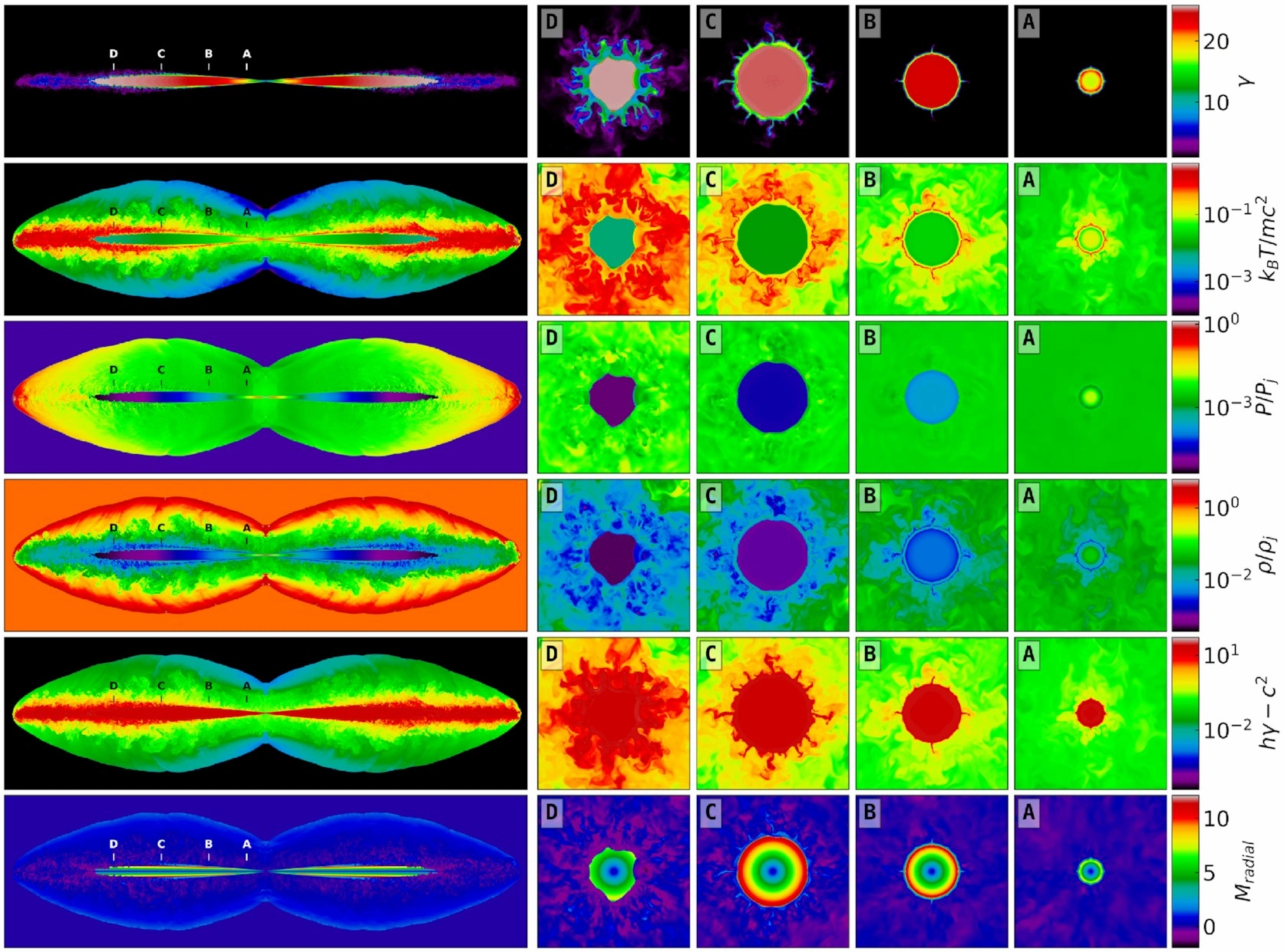
We develop a new special relativistic hydrodynamics module that robustly handles flows spanning ultra-relativistic to non-relativistic regimes. The solver supports Lorentz factors as high as $10^6$, incorporates adaptive mesh refinement, mitigates catastrophic floating-point cancellation, and achieves high GPU performance with excellent scalability to over 2,000 GPUs.