An Adaptive Mesh, GPU-Accelerated, and Error Minimized Special Relativistic Hydrodynamics Code
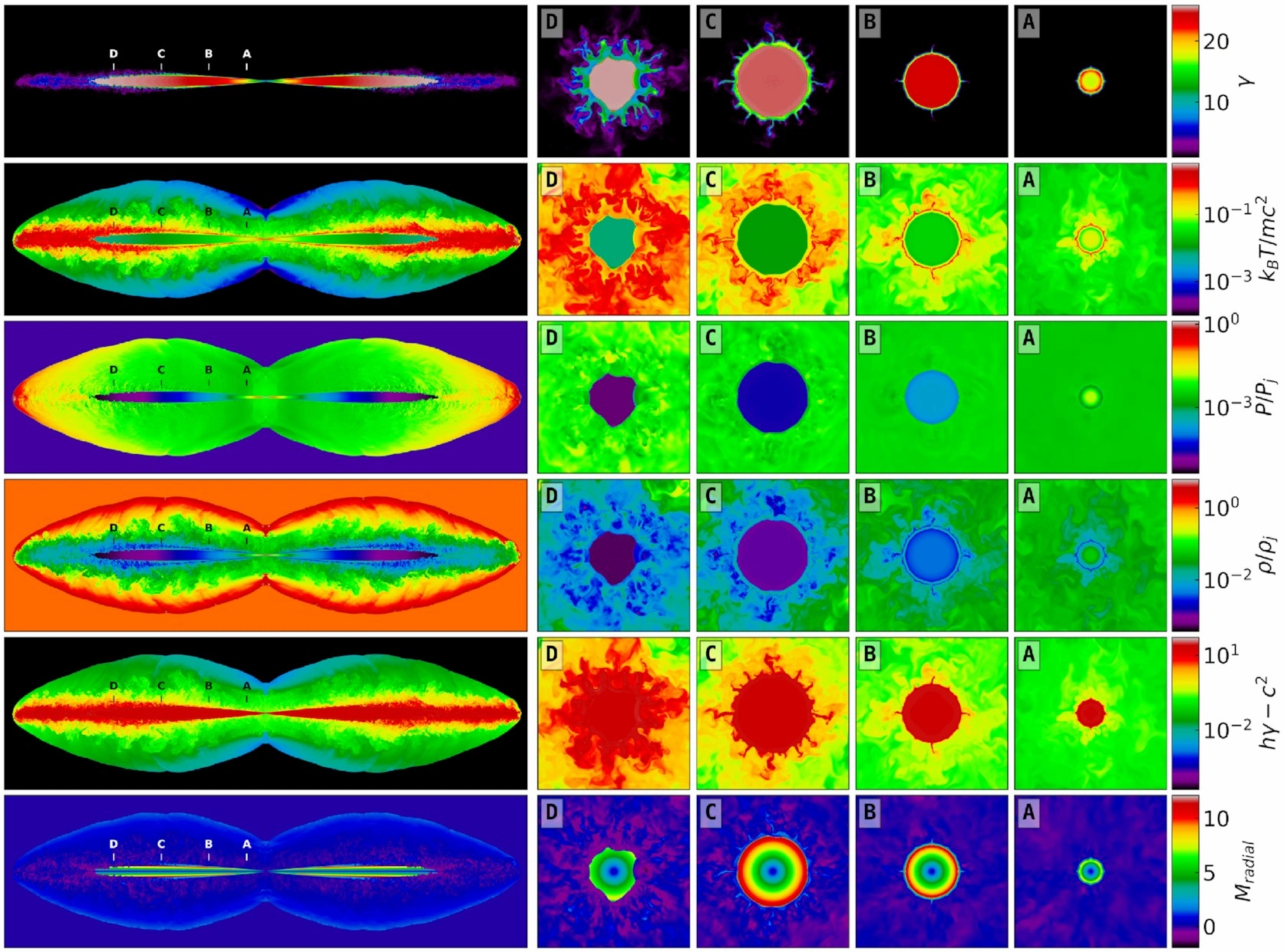
We develop a new special relativistic hydrodynamics module that robustly handles flows spanning ultra-relativistic to non-relativistic regimes. The solver supports Lorentz factors as high as $10^6$, incorporates adaptive mesh refinement, mitigates catastrophic floating-point cancellation, and achieves high GPU performance with excellent scalability to over 2,000 GPUs.
- Date: 2021-04-13 00:00:00 +0000
Boosting Supermassive Black Hole Growth in the Early Universe by Fuzzy Dark Matter Solitons
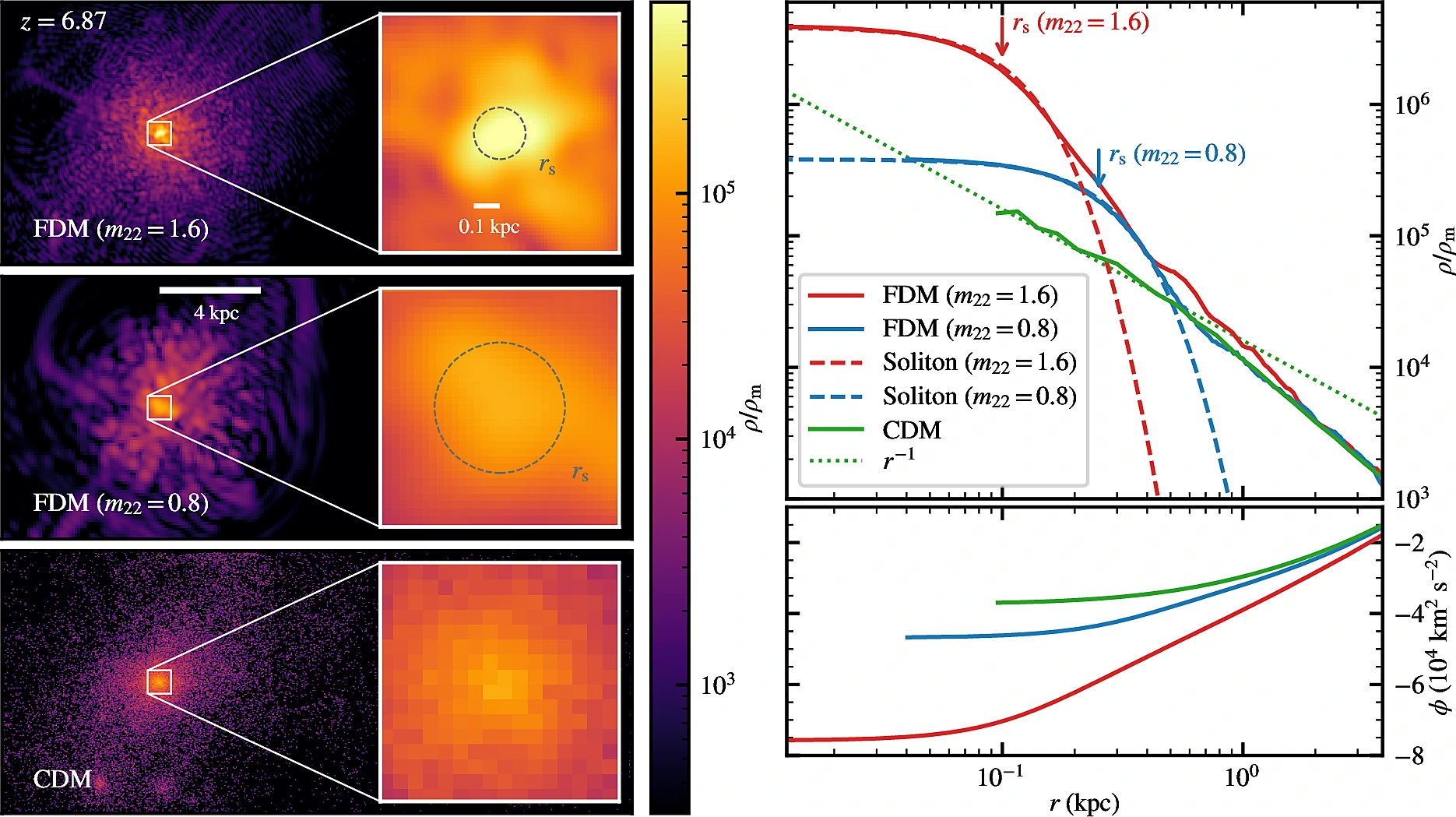
We demonstrate that ultradense fuzzy dark matter solitons, which naturally form at high redshifts with masses comparable to supermassive black holes (SMBHs), can drive rapid early SMBH growth. The soliton’s deep gravitational potential compresses the surrounding gas and triggers a two-stage accretion process that enhances the Bondi accretion rate by 2–4 orders of magnitude under efficient cooling. This mechanism offers a viable pathway for the formation of billion-solar-mass SMBHs within the first billion years of the Universe.
- Date: 2024-02-06 00:00:00 +0000
Can the Symmetric Fermi and eROSITA Bubbles Be Produced by Tilted Jets?
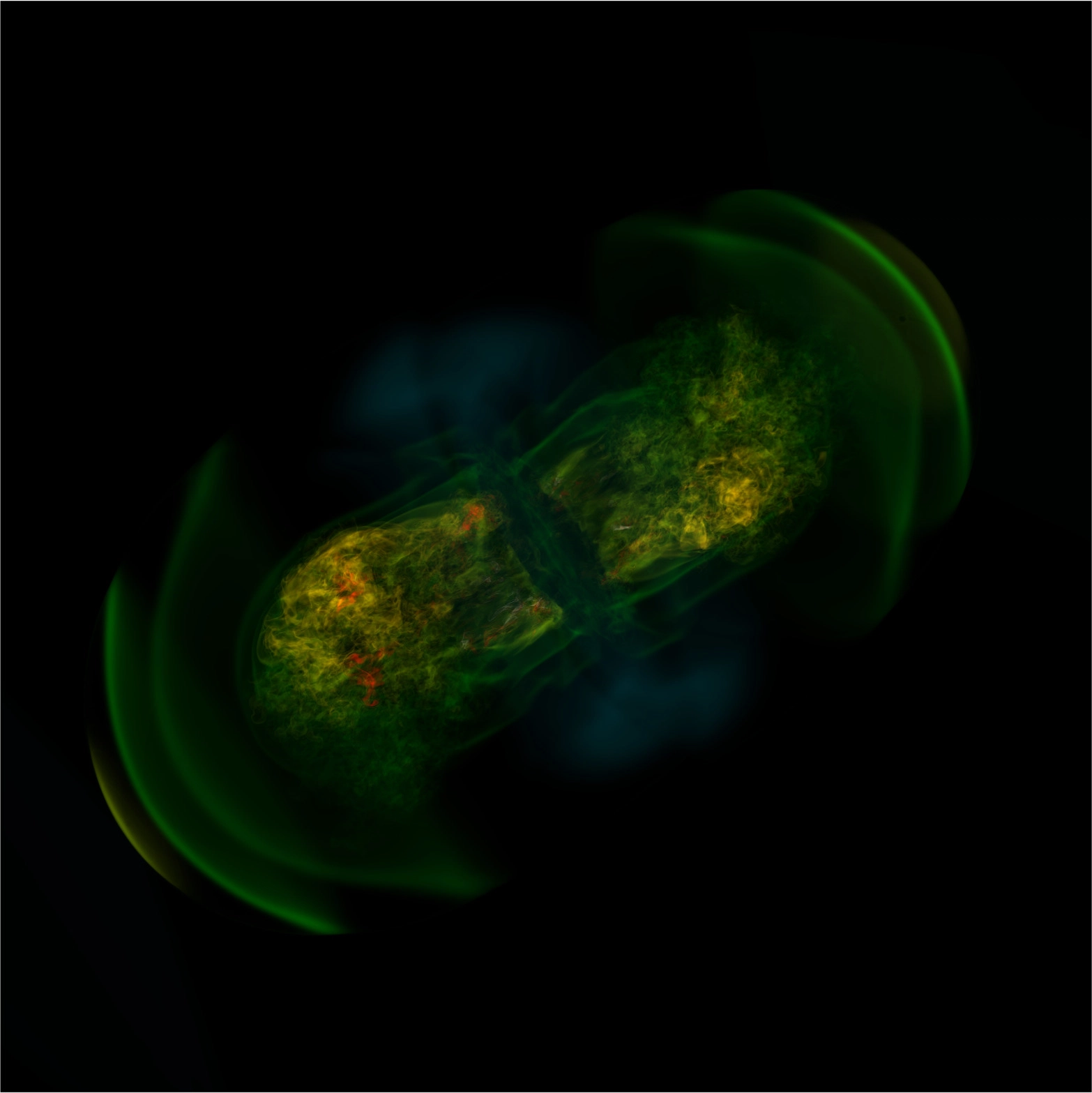
In collaboration with Prof. Karen Yang (NTHU), we conduct special relativistic hydrodynamic simulations with cosmic rays to investigate the origin of the Fermi and eROSITA bubbles in the Milky Way. The results demonstrate that oblique AGN jets from the Galactic center, when disrupted by dense clumpy gas in the Galactic disk, can inflate hot buoyant bubbles whose morphology and multi-wavelength signatures closely reproduce the observed symmetric Galactic bubbles.
- Date: 2024-07-26 00:00:00 +0000
Cool-Core Destruction in Merging Clusters with AGN Feedback and Radiative Cooling
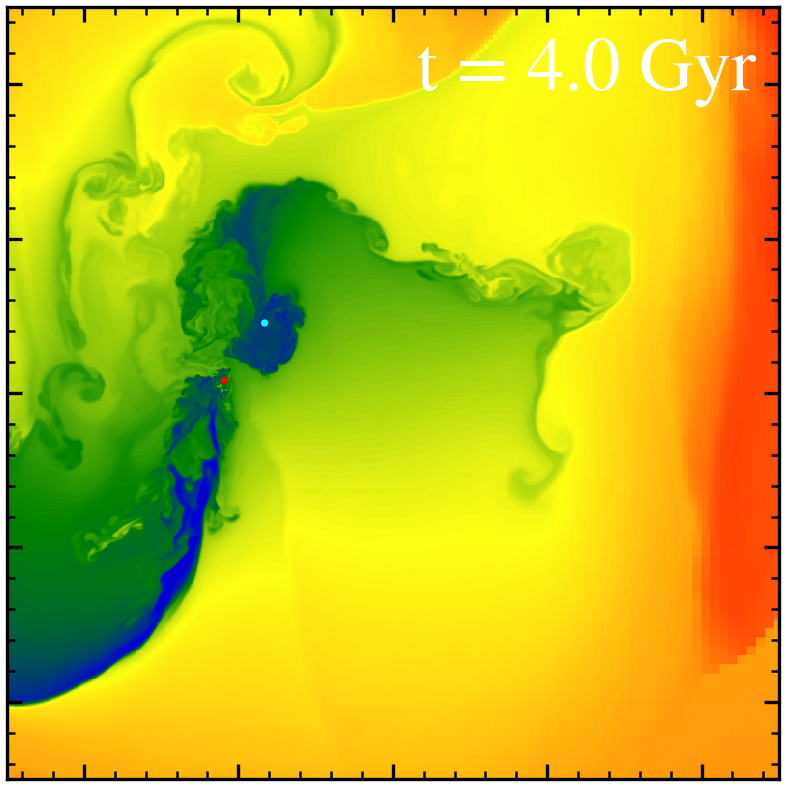
In collaboration with Prof. Karen Yang (NTHU), we simulate binary galaxy cluster mergers, including cold dark matter, hydrodynamics, AGN feedback, and radiative cooling, to investigate the origin of the cool-core and non-cool-core dichotomy in galaxy clusters. The results reveal the critical role of AGN feedback in regulating core properties during mergers and show that cool-core destruction depends sensitively on the merger mass ratio and impact parameter.
- Date: 2024-12-18 00:00:00 +0000
Cosmological Zoom-In Simulation of Fuzzy Dark Matter Down to z = 0: Tidal Evolution of Subhaloes in a Milky Way-Sized Halo
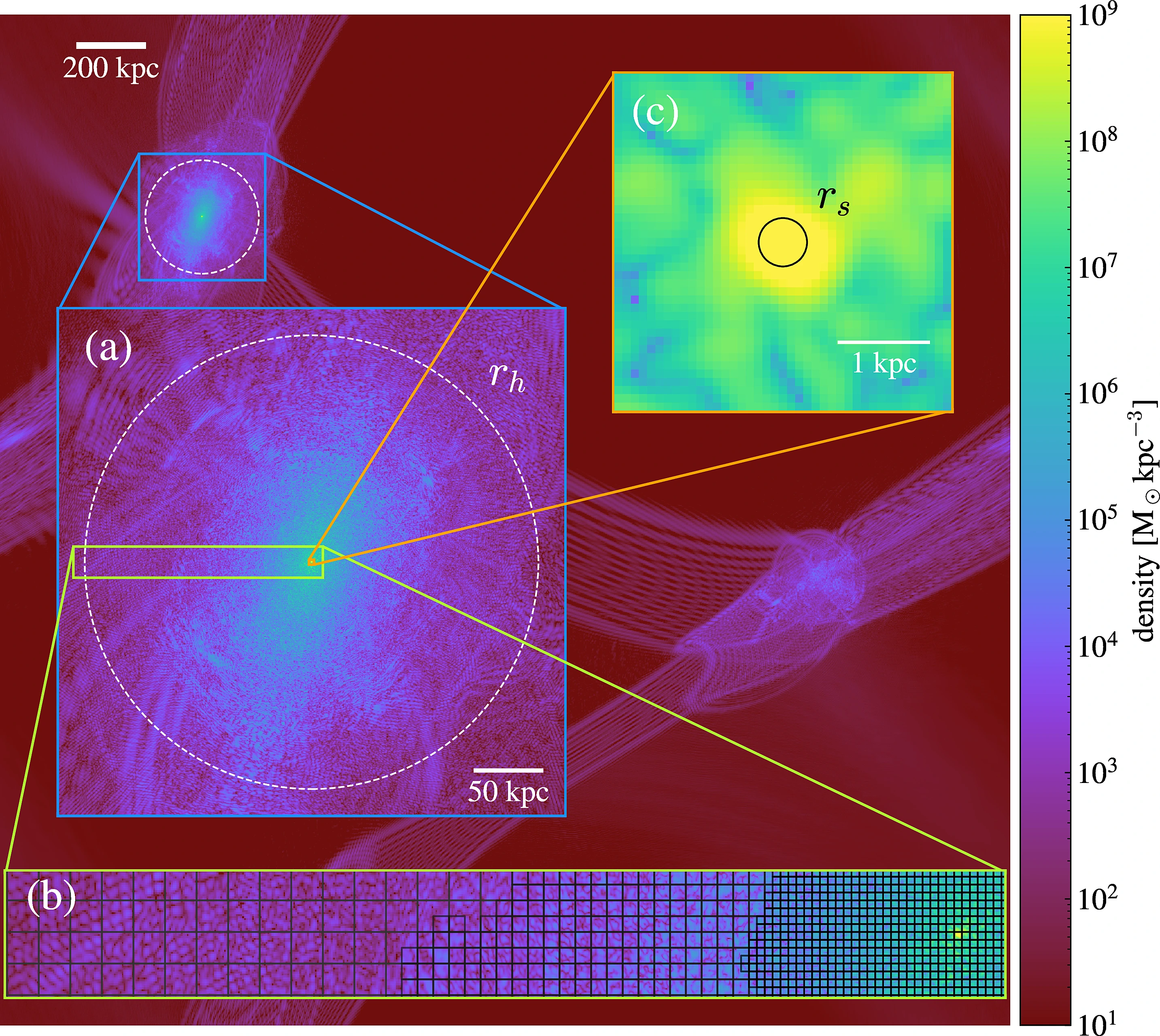
We present the first self-consistent fuzzy dark matter cosmological zoom-in simulation that follows a Milky Way-sized halo and its substructures to redshift zero. The results show that solitonic cores are resilient to tidal interactions, but the universal soliton–halo relation breaks down for tidally stripped subhalos. The simulations also reveal the key roles of granule heating and wave interference in soliton stability, challenging simplified analytic models of subhalo evolution.”
- Date: 2025-05-21 00:00:00 +0000
A Hybrid Scheme for Fuzzy Dark Matter Simulations Combining the Schrödinger and Hamilton–Jacobi–Madelung Equations
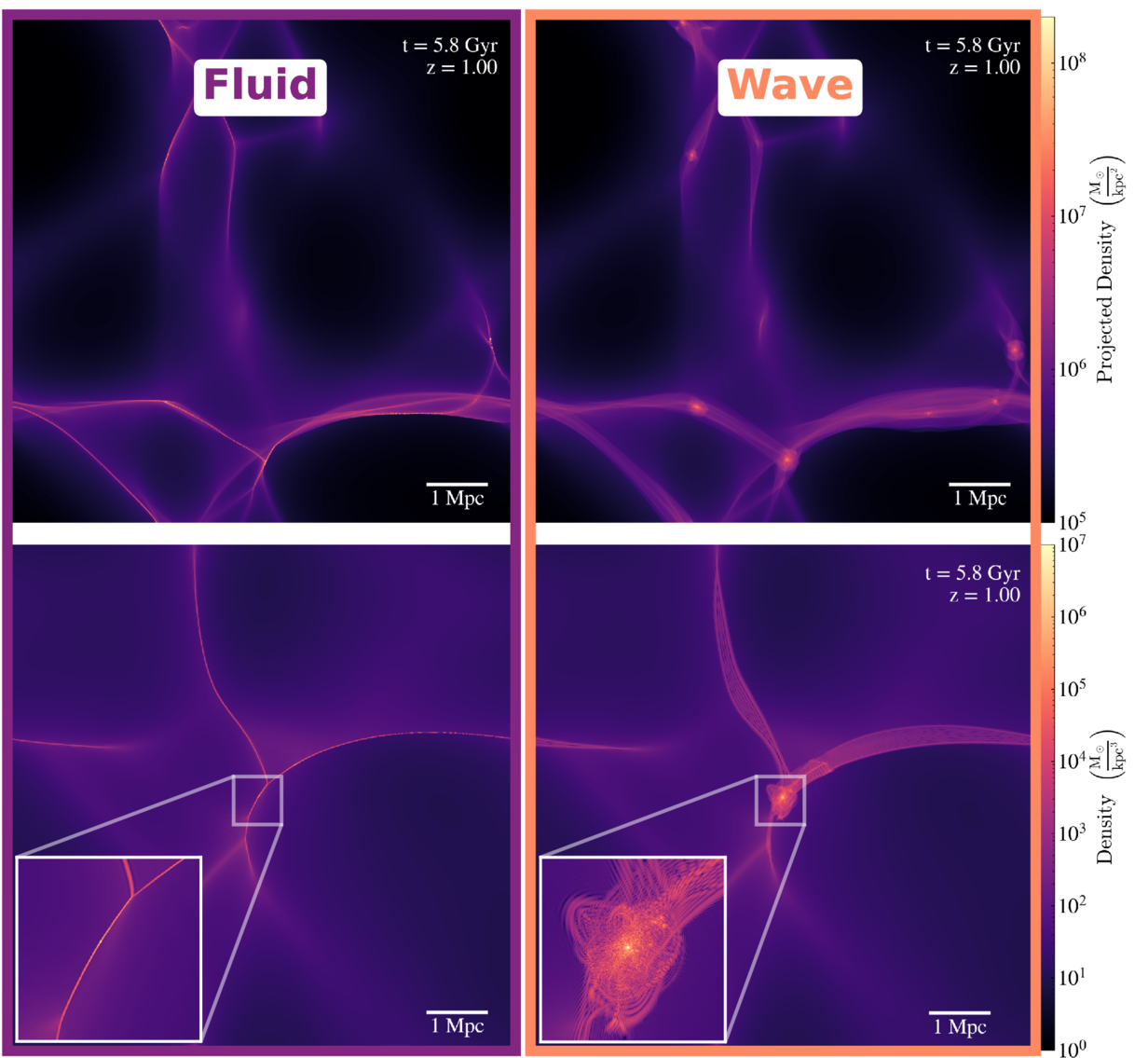
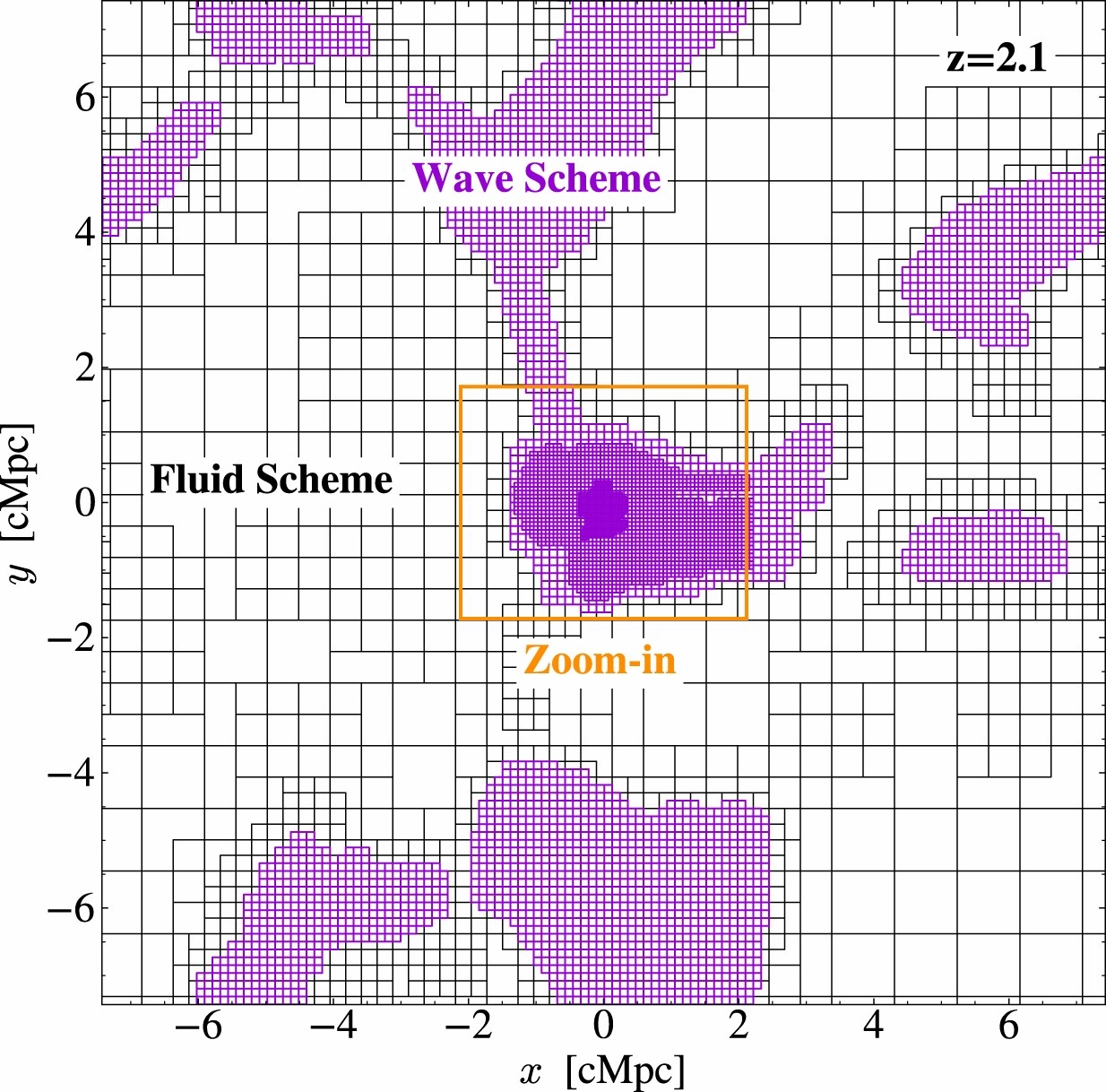
The short de Broglie wavelength and rapid oscillations associated with high-velocity flows pose a significant challenge for fuzzy dark matter (FDM) simulations, especially for larger FDM particle mass. To address this limitation, we develop a hybrid numerical scheme in GAMER that integrates the wave-based Schrödinger–Poisson formulation with the fluid-based Hamilton–Jacobi–Madelung equations. This approach uses efficient fluid solvers on large, smooth scales while employing wave solvers on refined grids to capture interference patterns and solitonic structures with high accuracy. The wave solver incorporates a novel local pseudo-spectral method based on Fourier continuations with discrete Gram polynomials, together with a robust boundary-matching algorithm that ensures smooth reconstruction of the wave function across fluid–wave interfaces. This hybrid scheme substantially extends the feasible volume of FDM cosmological simulations.
- Date: 2025-07-22 00:00:00 +0000
Deciphering the Soliton-Halo Relation in Fuzzy Dark Matter
Using high-resolution fuzzy dark matter (FDM) cosmological simulations spanning wide particle mass and redshift ranges, we show that the degree of non-isothermality in FDM halos is tightly correlated with halo concentration. We further identify energy equipartition in the inner halo and thermal equilibrium between solitons and their surroundings. These results establish a predictive, physically grounded soliton–halo relation that resolves long-standing discrepancies among previous models and enables direct observational constraints on FDM.
- Date: 2025-08-08 00:00:00 +0000
The Tidal Evolution of Anisotropic Subhaloes: a New Pathway to Creating Isotropic and Cored Satellites
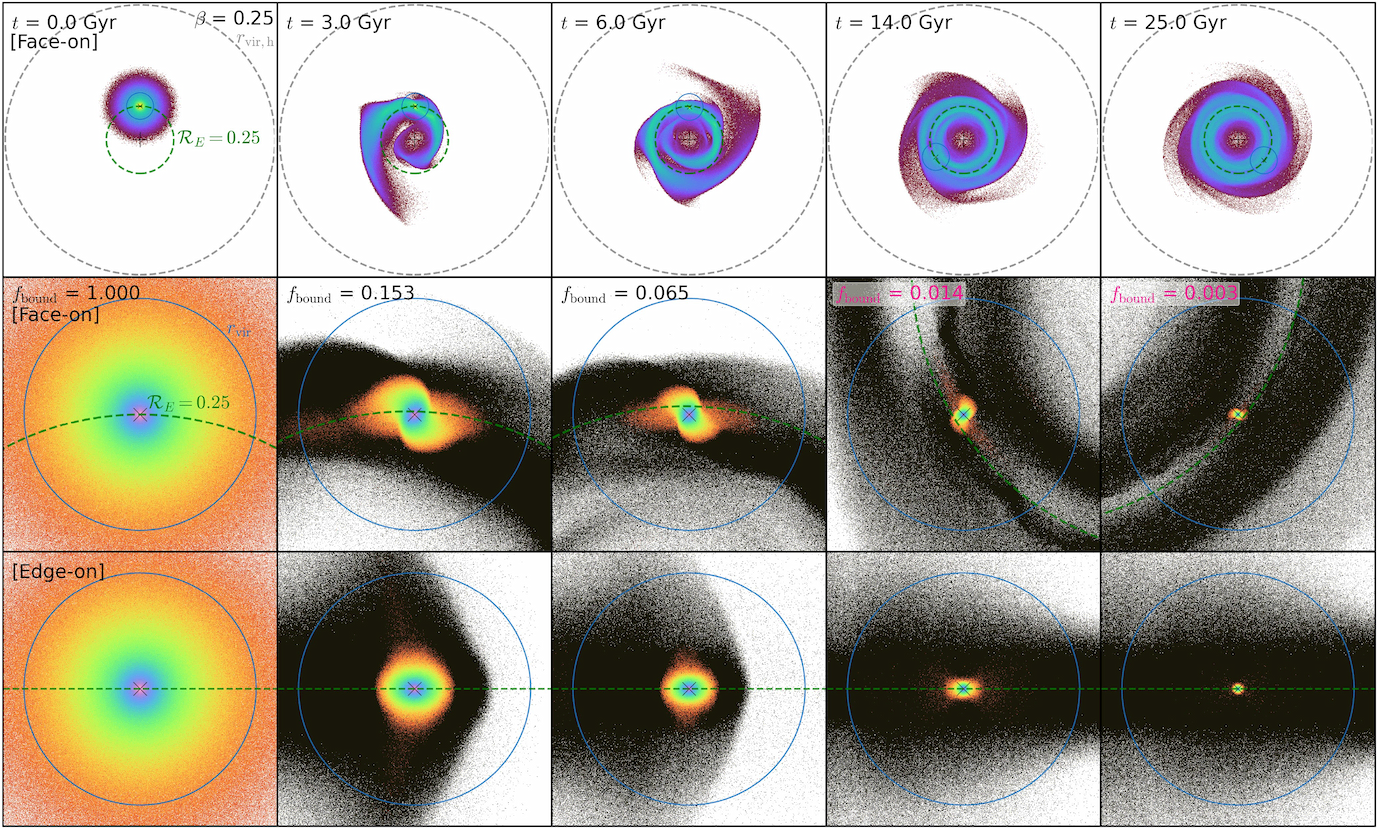
In collaboration with Barry Chiang and Prof. Frank van den Bosch (Yale University), we investigate the tidal evolution of anisotropic subhalos using high-resolution N-body simulations with GAMER. The results show that subhalos with strong radial anisotropy at infall experience significant mass loss, leading to cusp–core transformation or even complete tidal disruption, whereas tangentially anisotropic systems are significantly more stable. This tidal evolution drives tidally stripped subhalos toward velocity isotropy, offering a natural explanation for the observed isotropic, cored satellites without invoking baryonic feedback.
- Date: 2025-09-26 00:00:00 +0000
libyt: an In Situ Interface Connecting Simulations with yt, Python, and Jupyter Workflows
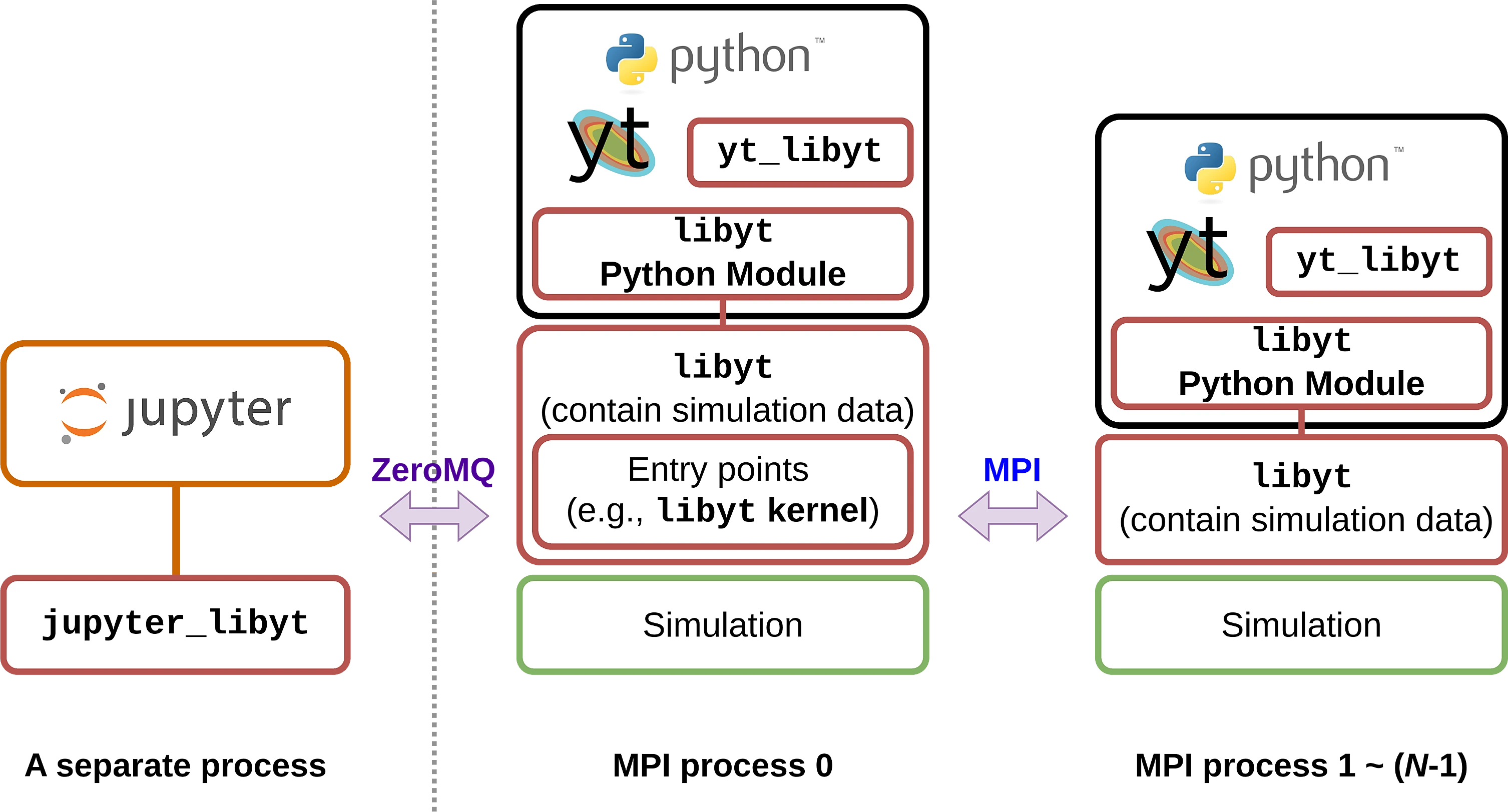
We present libyt, an open-source C library that enables in situ analysis of astrophysical simulation data by directly connecting simulation codes to the Python ecosystem, including yt and Jupyter workflows, without costly intermediate disk I/O. libyt allows simulations to execute Python analysis routines at runtime, reuse existing post-processing scripts with minimal changes, and interactively explore data via Python prompts or Jupyter notebooks. We describe its architecture, API design, and integration into high-performance simulation codes such as GAMER and Enzo, and demonstrate its application to a range of problems, including core-collapse supernovae, isolated dwarf galaxies, and fuzzy dark matter. libyt thus bridges high-performance simulations with flexible data analysis and visualization in a unified, scalable workflow.
- Date: 2025-12-11 00:00:00 +0000
Fuzzy Dark Matter
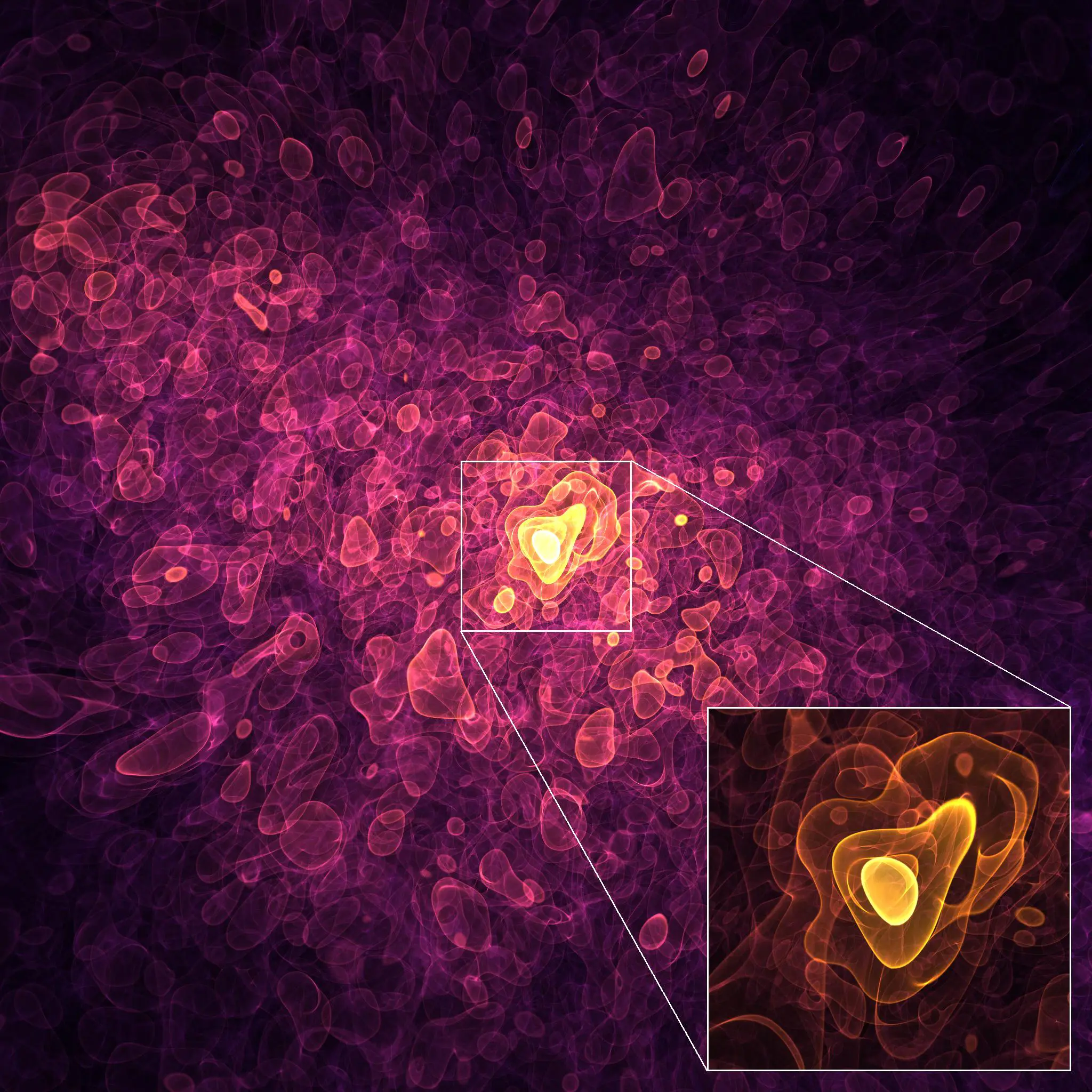
Fuzzy dark matter (FDM) is a well-motivated dark matter candidate consisting of ultralight bosons with mass $~10^{-22}–10^{-19}$ eV. Its dynamics is governed by the Schrödinger–Poisson equations. The associated large de Broglie wavelength leads to distinctive wave-like phenomena on galactic scales, including the suppression of low-mass halos by quantum pressure, granular density fluctuations and vortices arising from wave interference, and the formation of compact soliton cores corresponding to the ground state of the halo potential. This project aims to build upon a series of state-of-the-art FDM simulations to directly confront model predictions with observational data and thereby constrain the FDM particle mass.
GAMER Development
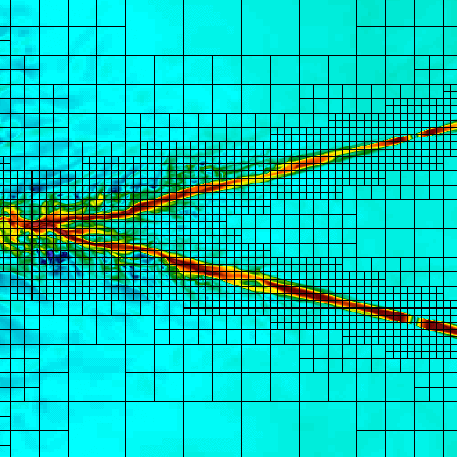
GAMER is the world’s first GPU-accelerated adaptive mesh refinement (AMR) code for astrophysical simulations and exascale computing. Originally developed from scratch by the NTU group, it has since evolved into a robust open-source project, with broad contributions and scientific applications from both domestic and international collaborations. The code incorporates several key technical advancements, such as AMR, hybrid CPU/GPU parallelization, and in situ data analysis. It also supports comprehensive physics modules, including (special relativistic) hydrodynamics, magnetohydrodynamics, self-gravity, cold/fuzzy dark matter, star formation, chemistry and radiative processes, cosmic rays, and baryonic feedback.
GAMER Applications
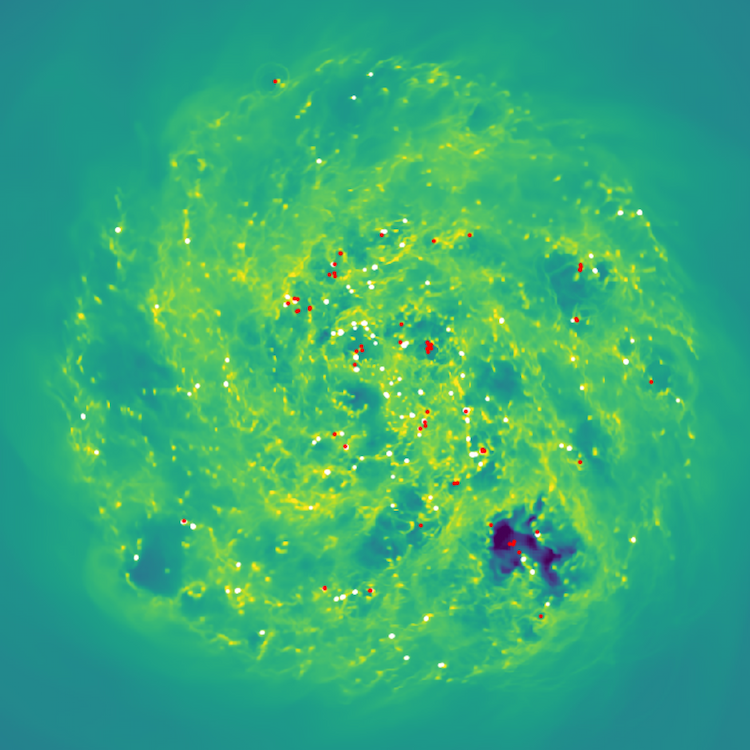
Leveraging GAMER’s high performance and comprehensive physics capabilities, we have established strong domestic and international collaborations that apply the code to a broad range of key astrophysical problems. These include supermassive black hole feedback in galaxy clusters, the explosion mechanism of core-collapse supernovae, resolved stellar feedback in dwarf galaxies, the Fermi and eROSITA bubbles in the Milky Way, and the tidal evolution of anisotropic subhalos.
Sponsors